March Birthstone Guide: Aquamarine and Bloodstone Explained Clearly
People born in March are associated with two different birthstones, a detail that often causes confusion when researching jewellery or gift options. Unlike most months, March does not have a single definitive gemstone. Instead, it is linked with Aquamarine and Bloodstone, both recognised and historically valid.
This guide explains why March has two birthstones, what each stone represents, how they differ in appearance and practicality, and how to choose the right one based on lifestyle, symbolism, and personal preference. Rather than repeating common gemstone lore, this article focuses on clarity, relevance, and real-world usefulness.
What Are the Birthstones for March?
The gemstones associated with March are Aquamarine and Bloodstone. Aquamarine is commonly referred to as the modern March birthstone, while Bloodstone is known as the traditional option. Both are correct, and neither has replaced the other.
The reason two stones exist is tied to how birthstone lists developed over time. Earlier lists were influenced by regional customs, availability of gemstones, and symbolic meaning. Later, modern lists were standardised by jewellery associations to reflect stones that were more accessible and widely used in contemporary jewellery.
As a result, people born in March are not limited to a single gemstone. Instead, they can choose the stone that best aligns with their aesthetic taste, values, or intended use.
Why March Has Two Birthstones
The idea of birthstones predates modern jewellery standards by centuries. Early birthstone traditions were shaped by cultural beliefs, trade routes, and symbolism rather than uniform rules. Bloodstone became associated with March during this period due to its perceived protective qualities and strong visual symbolism.
In the early twentieth century, jewellery organisations introduced updated birthstone lists to bring consistency to the industry. Aquamarine was added for March because it was durable, visually appealing, and increasingly popular in fine jewellery. Rather than removing Bloodstone, Aquamarine became an alternative.
Today, both stones coexist. This dual association reflects how birthstones have evolved rather than contradicts the tradition. Understanding this context helps explain why different sources may list different stones while still being accurate.
Aquamarine: Characteristics and Meaning

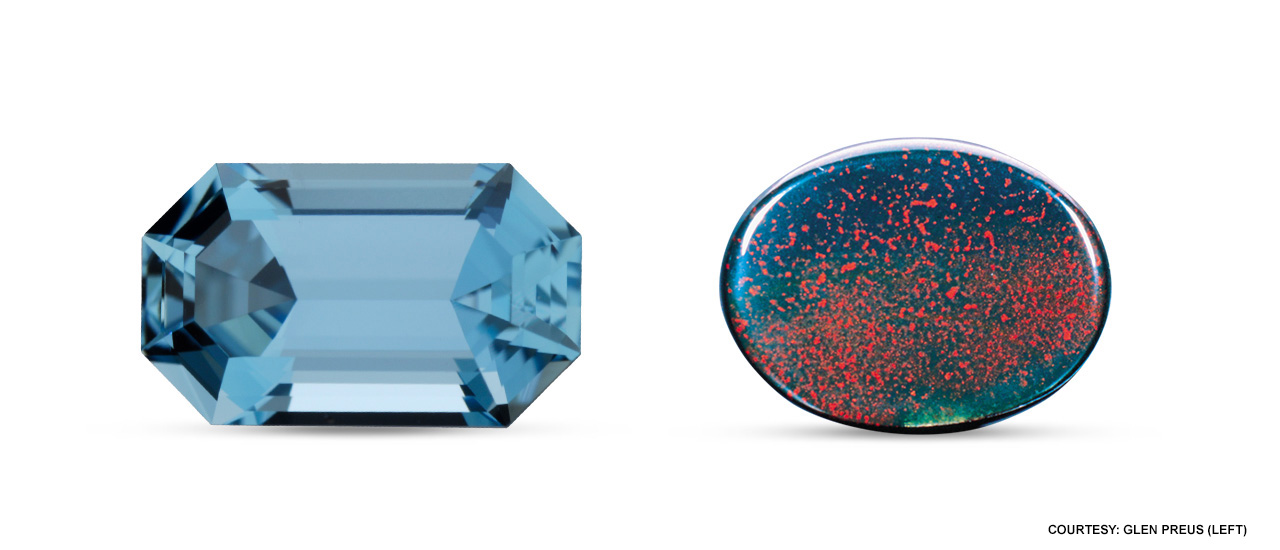
Aquamarine is a transparent gemstone belonging to the beryl family. Its colour ranges from pale blue to blue-green, often compared to clear seawater. The stone is valued more for its clarity and brightness than for intense saturation, which gives it a clean, understated appearance.
Symbolically, Aquamarine is associated with calmness, clear communication, and emotional balance. Many people choose it for its soothing visual effect and its connection to water and renewal. These associations make it especially appealing to individuals who prefer subtle elegance over bold statement pieces.
Aquamarine is commonly faceted to enhance light reflection, which contributes to its popularity in rings, earrings, and pendants designed for regular wear.
Durability and Practical Use of Aquamarine
Aquamarine ranks between 7.5 and 8 on the Mohs hardness scale, making it a durable gemstone suitable for everyday jewellery. It resists scratching better than many coloured stones, especially when set properly and cared for responsibly.
Because of its strength and transparency, Aquamarine works well in minimalist designs as well as more intricate settings. It pairs naturally with white metals such as white gold and platinum, though it also complements yellow and rose gold.
From a practical standpoint, Aquamarine is often chosen by those who want a March birthstone that balances beauty with long-term wearability.
Bloodstone: Origins and Symbolism
Bloodstone is a dark green gemstone marked with red or brownish-red spots caused by iron oxide. Unlike Aquamarine, it is opaque and has a more grounded, earthy appearance. Bloodstone is a form of chalcedony, which places it within the quartz family.
Historically, Bloodstone has been associated with strength, endurance, and protection. It was valued in ancient societies not for brilliance, but for symbolism. The contrast between the green base and red inclusions gave it a powerful visual identity that set it apart from other stones.
Bloodstone appeals to people who value tradition, depth, and symbolic meaning over sparkle. Its appearance feels intentional and bold rather than decorative.
Bloodstone Durability and Jewellery Use

Bloodstone has a Mohs hardness of approximately 6.5 to 7, making it slightly less resistant to scratches than Aquamarine. For this reason, it is often cut as a cabochon rather than faceted, which helps protect the stone and highlights its natural pattern.
It is commonly used in rings, pendants, cufflinks, and signet-style jewellery. Bloodstone works particularly well in designs that emphasise weight and structure rather than delicacy.
While it may not be ideal for rough daily wear, Bloodstone remains a practical option when set thoughtfully and worn with care.
Aquamarine vs Bloodstone: Key Differences
Although both stones represent March, they serve very different preferences.
Aquamarine is light, transparent, and reflective. It suits people who prefer clean lines, soft colours, and jewellery that blends easily into everyday outfits. Bloodstone is darker, opaque, and visually striking, making it better suited to those who prefer bold or symbolic pieces.
In terms of durability, Aquamarine is generally better for daily wear. In terms of symbolism, Bloodstone carries deeper historical associations. Neither is superior; the choice depends on what the wearer values most.
Some individuals choose both stones, using Aquamarine for everyday jewellery and Bloodstone for pieces with personal or ceremonial significance.
Zodiac Associations for March Birthstones
March spans two zodiac signs: Pisces and Aries. While zodiac associations are optional, they often influence birthstone choices.
Aquamarine is frequently linked with Pisces due to its connection with water, intuition, and emotional clarity. Bloodstone aligns more closely with Aries, reflecting strength, courage, and forward momentum.
These associations are not rules, but they offer an additional framework for those who enjoy symbolic alignment when choosing jewellery.
How to Care for March Birthstone Jewellery
Proper care helps preserve the appearance and longevity of both March birthstones.
Aquamarine can be cleaned using warm water, mild soap, and a soft brush. It should be stored separately from harder gemstones to avoid surface scratches.
Bloodstone should be cleaned gently with a damp cloth and mild soap if needed. Avoid harsh chemicals and ultrasonic cleaners, as they may damage the stone or its polish.
Regardless of the gemstone, removing jewellery during heavy physical activity and storing it properly will significantly extend its lifespan.
Choosing Authentic March Birthstone Jewellery
When purchasing March birthstone jewellery, transparency matters. Buyers should look for clear information regarding gemstone type, treatments, and materials used in the setting. While Aquamarine is often heat-treated to enhance colour, this is a standard and accepted practice when disclosed properly.
Bloodstone is typically untreated, but quality can vary based on colour contrast and finish. Reputable sellers provide accurate descriptions and avoid exaggerated claims about metaphysical effects.
Choosing authenticity over trend ensures the jewellery retains both material and personal value.
Meaning and Relevance of March Birthstones Today
The March birthstones reflect balance and choice rather than limitation. Aquamarine represents clarity, calm, and adaptability, while Bloodstone symbolises strength, resilience, and tradition. Together, they reflect the transitional nature of March itself.
Rather than asking which stone is “correct,” the better question is which stone fits the wearer’s life, style, and intentions. That flexibility is what makes March unique among birthstone months.
Frequently Asked Questions
Is there only one real birthstone for March?
No. Both Aquamarine and Bloodstone are officially recognised and historically valid.
Why do jewellers usually promote Aquamarine?
Aquamarine is more commonly used in modern jewellery due to its transparency, durability, and broad appeal.
Is Bloodstone outdated?
No. It remains meaningful and relevant, especially for those who value symbolism and traditional designs.
Can both stones be worn together?
Yes. Some jewellery designs incorporate both stones to represent balance and contrast.
Which March birthstone lasts longer?
Aquamarine generally holds up better to daily wear due to its higher hardness.
You may also read: Preparing for Parenthood