
Padel Rules: The Ultimate UK Guide to Playing, Scoring, and Mastering Padel Tennis
Padel is one of the fastest-growing sports in the UK, attracting players from tennis, squash, and completely new backgrounds. As more clubs open across London and other major cities, understanding the official padel rules has become essential for anyone looking to play confidently, fairly, and competitively. While padel is easy to pick up, its unique rules around walls, serving, and scoring often confuse new players.
Learning padel rules properly does more than prevent mistakes. It improves match flow, reduces disputes, and allows players to enjoy the strategic depth that makes padel so addictive. Whether you are playing socially, joining a local league, or preparing for competitive matches, knowing how the game works under official regulations will immediately elevate your experience on court.
What Is Padel and How Does It Differ from Other Racket Sports
Padel is a doubles racket sport played on an enclosed court that combines elements of tennis and squash. Unlike tennis, padel rules allow players to use the surrounding glass walls and metal cage during rallies, creating longer points and more tactical play. The smaller court size and mandatory doubles format encourage teamwork, positioning, and communication.
In the UK, padel is often compared to tennis or pickleball, but its rules make it unique. The serve is always underarm, the ball must bounce before hitting walls, and players can legally retrieve balls from outside the court in certain situations. Understanding these distinctions early helps players avoid common beginner mistakes and adapt quickly to the rhythm of padel tennis.
Padel Court Dimensions and Layout Explained
A standard padel court measures 20 metres long and 10 metres wide, divided by a net in the centre. Each side contains two service boxes, similar to tennis, but the court is fully enclosed with glass walls at the back and metal fencing along the sides. These walls are an integral part of padel rules and are actively used during rallies.
The glass walls allow the ball to rebound after bouncing, while the metal cage produces more unpredictable deflections. During rallies, both surfaces are legal once the ball has bounced on the ground first. However, the rules differ during serves, making it essential for players to understand when wall contact is allowed and when it results in a fault.
Padel Equipment Rules and Requirements
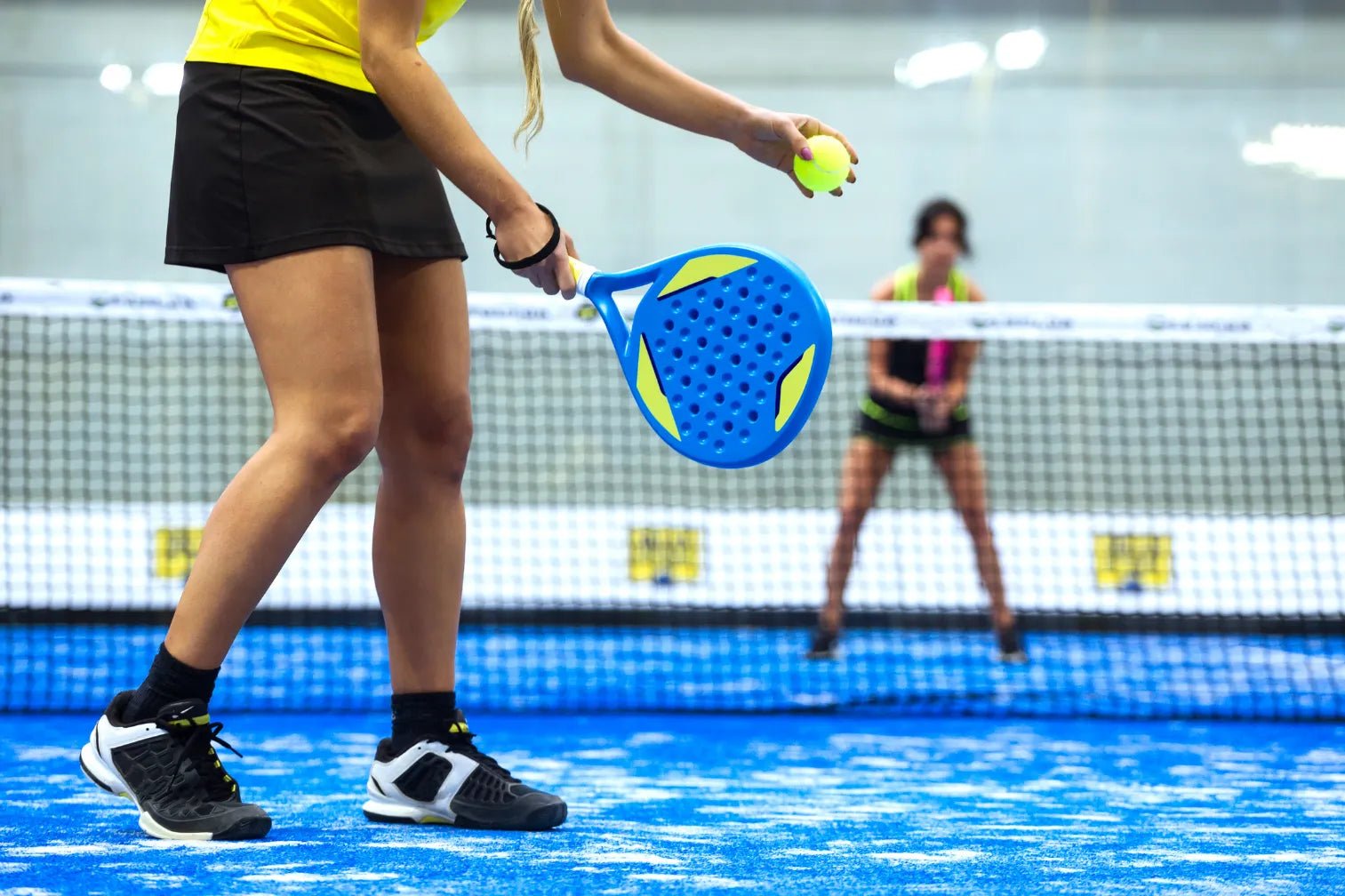
Padel rackets are solid with no strings and feature perforated faces designed for control rather than raw power. According to padel rules, rackets must include a safety wrist strap, which must be worn at all times. This rule exists to protect players and spectators from accidental racket release during fast rallies.
Padel balls are similar to tennis balls but slightly less pressurised. Wearing proper padel shoes with good grip is strongly recommended, especially on artificial turf courts common in the UK. Using approved equipment ensures fair play and reduces injury risk, particularly for beginners still adapting to movement patterns and wall play.
Basic Padel Rules Every Player Must Know
Padel is always played in doubles, with two players on each team. Matches typically follow a best-of-three sets format, using tennis-style scoring: 15, 30, 40, and game. To win a set, a team must win six games with a two-game advantage, unless a tie-break is played at 6–6.
A key padel rule is the single bounce rule. The ball may only bounce once on your side before it must be returned. If it bounces twice, the point is lost. During rallies, the ball must always bounce on the court before touching the wall or cage. Understanding this rule alone eliminates many beginner errors and keeps points fair and fluid.
Padel Serving Rules Explained in Detail
Serving in padel is one of the most rule-specific aspects of the game. The serve must be hit underarm, with the ball struck below waist height after bouncing on the ground. The server must stand behind the service line, keeping at least one foot on the ground, and serve diagonally into the opponent’s service box.
If the ball bounces in the correct service box and then hits the back glass, the serve is valid. However, if it hits the side fence after the bounce, the serve is out. Players are allowed two serve attempts per point. If the ball clips the net and lands correctly without touching the side fence, it is called a let, and the serve is replayed.
Scoring System and the Golden Point Rule
Padel uses the same point structure as tennis, but many competitions now apply the golden point rule. When the score reaches 40–40, the receiving team chooses which side to receive from, and the next point decides the game. This rule speeds up matches and increases pressure during key moments.
Tie-breaks are usually played when a set reaches 6–6. The first team to reach seven points with a two-point advantage wins the tie-break and the set. Knowing these scoring details helps players manage momentum and understand tactical decisions during close matches.
Padel Rules for Walls: What Is In and What Is Out
Walls are central to padel strategy, but they also come with strict rules. During rallies, the ball is considered in if it bounces on the court and then hits the glass or cage. Players may wait for the ball to rebound off the wall before returning it, adding depth and creativity to rallies.
A ball is out if it hits the wall or fence without first bouncing on the court. If the ball bounces twice before being returned, the point ends immediately. On serves, wall rules are stricter, and hitting the side fence after the bounce results in a fault. Understanding these differences prevents confusion during matches.
Net Rules and Common Faults in Padel
Touching the net during a point is always a fault in padel. If a player’s racket, clothing, or body makes contact with the net while the ball is in play, the point is awarded to the opponents. This rule encourages controlled net play and prevents unsafe movement.
Another important fault involves double hits. Players may not hit the ball twice in the same motion, and deliberate double contacts are illegal. Accidentally hitting the ball off the frame is allowed only if it occurs as part of a single continuous swing.
Out-of-Court Play and Ball Recovery Rules
One of the most exciting padel rules allows players to leave the court to retrieve the ball. If an opponent’s shot bounces and then exits the court, players may run outside through the side doors and return the ball before it bounces a second time.
If the ball bounces and then returns to the opponent’s side after hitting the wall or fence, the point is technically won. However, players may still recover the ball from the opponent’s side in professional play, provided it is returned legally. This rule adds flair and athleticism but requires excellent timing and awareness.
Advanced Padel Rules and Tactical Considerations
At higher levels, understanding advanced padel rules becomes a competitive advantage. Players use walls intentionally to reset points, force defensive positions, and create angled shots that are difficult to attack. Mastery of legal wall usage separates intermediate players from advanced competitors.
Team communication is also governed by positioning rules. Both players may hit the ball from anywhere on their side of the court, but crossing into the opponent’s space is not allowed unless retrieving a ball that has already crossed back. Clear understanding of court boundaries avoids unnecessary faults.
Where to Play Padel in the UK
Padel courts are rapidly expanding across the UK, with facilities available in London, Manchester, Birmingham, and many surrounding areas. Clubs often offer beginner sessions, social leagues, and coaching programmes designed to teach padel rules correctly from day one.
When booking a court, players are expected to follow club-specific etiquette alongside official padel rules. Respecting time slots, wearing proper footwear, and understanding basic regulations ensures a positive experience for everyone involved.
Equipment Tips for Beginners Following Padel Rules
Beginners should choose control-focused rackets that offer forgiveness rather than power. Lightweight rackets with a larger sweet spot make it easier to follow padel rules related to controlled serves and legal returns. Clubs often provide rental equipment, allowing new players to experiment before purchasing.
Using the correct equipment not only improves performance but also ensures compliance with safety rules. Wearing the wrist strap, using approved balls, and choosing proper shoes reduce injury risk and help players focus on learning the game rather than managing equipment issues.
Conclusion
Understanding and applying the padel rules is essential for enjoying the sport to its fullest. From serving and scoring to wall play and out-of-court recovery, padel combines structure with creativity in a way few sports can match. Learning the rules properly builds confidence, fairness, and tactical awareness.
As padel continues to grow across the UK, players who invest time in mastering the rules will gain a clear advantage on court. Whether you are playing socially or competitively, following official padel rules ensures a rewarding, dynamic, and highly enjoyable sporting experience.
You may also read: Booking Your TeamSport Go Karting Manchester Victoria Experience