Modernizing Library Operations with Mobile Scanning Technology
Libraries are rapidly evolving to meet the demands of a digitally connected world. To enhance user experience and streamline internal workflows, institutions are adopting new technologies. Mobile scanning has emerged as a crucial tool in this transformation. It revolutionizes book tracking, inventory management, and circulation accuracy, making library services more efficient for staff and patrons alike.
The Foundation: Barcodes and QR Codes in Libraries
Barcode technology is the bedrock of modern library management. These machine-readable codes visually represent data and connect physical items to a digital database. By scanning a barcode, a wealth of information about an item can be accessed instantly. Libraries primarily use two major types of codes.
One-Dimensional (1D) Barcodes
Linear barcodes, or 1D codes, store text-based information horizontally. Common symbologies like Code 39 and Code 128 are used for internal tracking, inventory, and library card identification. A critical 1D barcode is the International Standard Book Number (ISBN). It uniquely identifies a specific edition of a book, allowing librarians and patrons to distinguish it from others with similar titles.
Two-Dimensional (2D) Barcodes
Unlike 1D barcodes, 2D codes like the Quick Response (QR) code store data both horizontally and vertically. This allows them to hold significantly more information, such as website URLs, plain text, or links to digital content. QR codes are easily scanned by most smartphones, providing a simple way to bridge the gap between physical resources and online information. They are highly reliable, with built-in error correction that allows them to be read even if partially damaged.
Streamlining Core Library Functions with Mobile Scanning
The integration of mobile scanners transforms traditional library tasks, introducing significant gains in speed and precision. From circulation to inventory, these devices are essential for efficient library management.
Enhancing Circulation Accuracy
The circulation of materials is a primary application for barcodes. During checkout and check-in, staff simply scan the barcode on a book and the patron’s library card. This process is fast and virtually eliminates the human errors associated with manual data entry. The system instantly updates the item’s status in the library’s database, ensuring accurate circulation records.
Improving Inventory Efficiency
Manually checking inventory, or stock verification, is a time-consuming and arduous task. Mobile scanners make this process dramatically more efficient. Library staff can perform inventory checks by moving through the stacks and scanning the barcode on each book. This confirms the item is in stock and in its correct location. Advanced “batch scanning” features allow for the capture of hundreds of barcodes at once, further accelerating the process and boosting productivity.
Facilitating Book Tracking and Shelf Management
Effective book tracking begins with accessioning, where each new item is assigned a unique barcode linked to its bibliographic data. When a book’s barcode is scanned, staff can immediately access its record, including title, author, call number, and circulation status. This capability is invaluable for shelf management. If a book is misplaced, a quick scan can identify its proper location, allowing staff to return it quickly and maintain an organized collection.
The Mobile App: Bringing Scanning to Everyone
The accessibility of scanning technology has been greatly enhanced by mobile applications. These apps run on consumer smartphones or specialized mobile computers, putting powerful library tools in the hands of both patrons and staff.
How Mobile Scanning Apps Work
The functionality of a library scanning app is straightforward. The app utilizes the device’s built-in camera to take a snapshot of a barcode and decode it. If an ISBN is scanned, the app sends that number to a script running on a library server. This script then queries the library’s catalog to check for the book’s availability. It can also connect to external web services to retrieve additional information like book jackets, author details, or previews, which are then displayed to the user on their device.
Patron-Facing vs. Staff-Facing Applications
Mobile scanning serves distinct purposes for different users. For patrons, an app can be used anywhere, such as in a bookstore or a friend’s home. By scanning a book’s ISBN, they can instantly check if their local library has a copy available. Within the library, they can scan QR codes placed on shelves or promotional materials to access related digital resources, audio tours, or event information.
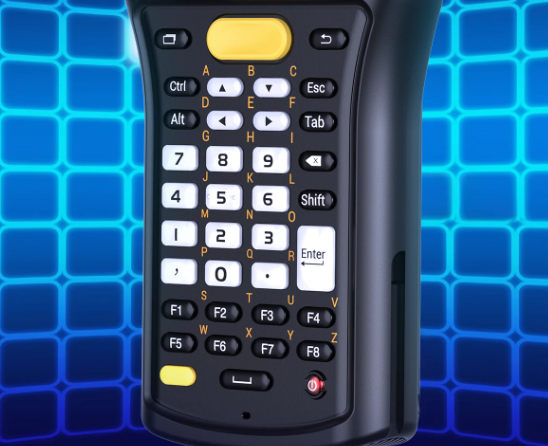
For library staff, dedicated devices are often used for more demanding operational tasks. A rugged and efficient mobile tera computeris ideal for high-volume work like inventory management, stock verification, and processing interlibrary loans. These professional-grade tools are designed for speed and reliability, ensuring that daily operations run smoothly and data remains accurate.
Conclusion
Mobile scanning technology has become an indispensable component of the modern library. By leveraging barcodes and QR codes, libraries can dramatically improve the accuracy of book tracking and circulation. This leads to greater inventory efficiency and a more organized collection. Ultimately, mobile scanning empowers both staff and patrons by simplifying complex processes, providing instant access to information, and seamlessly connecting the library’s physical and digital worlds. As technology continues to advance, these tools will play an even greater role in shaping the future of library services.