Herpes photos in different stages: What herpes looks like from early signs to healing stages
Herpes photos in different stages are widely searched by people trying to understand how the infection develops visually over time. Herpes is caused by HSV-1 or HSV-2 and can appear on the lips, mouth, genitals, or other areas of the body. Because symptoms vary so much between individuals, visual references are often used to help recognise patterns and progression.
Herpes photos in different stages also help explain how an outbreak changes from subtle early sensations to visible sores and eventual healing. However, it is important to understand that images alone cannot provide a diagnosis. The condition can look different depending on skin tone, immune response, and whether it is an initial or recurring outbreak.
Understanding herpes virus types and progression
Herpes is generally classified into HSV-1 and HSV-2, both of which can cause similar symptoms but often affect different areas of the body. HSV-1 is more commonly associated with oral infections, while HSV-2 is more often linked to genital outbreaks. Both types follow a similar cycle of development that can be understood through herpes photos in different stages.
The progression of herpes typically includes early warning signs, blister formation, ulceration, and healing. This cycle may last from a few days to several weeks depending on the severity of the outbreak. Herpes photos in different stages help illustrate this progression clearly, making it easier for individuals to understand what may be happening during each phase.
Early symptoms shown in herpes photos in different stages
Herpes photos in different stages often begin with the early or prodromal stage, where symptoms appear before visible sores develop. This stage may include tingling, itching, burning, or increased sensitivity in a specific area. Many people overlook these early signs, mistaking them for minor skin irritation or discomfort.
At this stage, herpes photos in different stages may show slight redness or swelling before blisters appear. Recognising these early symptoms is important because antiviral treatment is most effective when started quickly. Early detection can also help reduce the severity and duration of an outbreak significantly.
Blister formation in herpes photos in different stages
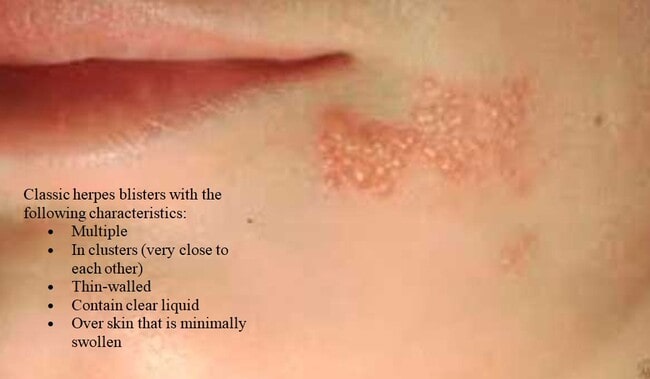
Herpes photos in different stages clearly show the blister stage as one of the most recognisable phases of infection. Small, fluid-filled blisters begin to form in clusters on red, inflamed skin. These blisters are often painful and sensitive, and they may increase in number as the outbreak progresses.
During this phase, herpes photos in different stages often highlight genital or oral areas depending on the type of infection. In genital herpes, blisters may appear on the penis, vulva, or surrounding skin. In oral herpes, they typically form around the lips or mouth. This stage marks an active and highly contagious period.
Ulceration stage in herpes photos in different stages
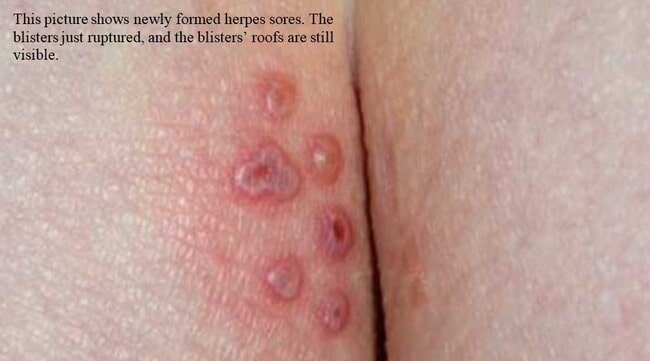
Herpes photos in different stages also show the ulceration phase, where blisters break open and turn into shallow, painful sores. This stage is often the most uncomfortable and can involve oozing fluid, redness, and increased sensitivity. The open sores are highly contagious and require careful hygiene and care.
At this point, herpes photos in different stages may display raw skin that appears inflamed and irritated. The ulcers gradually begin to dry out as the body starts the healing process. This stage usually lasts several days and represents the peak of discomfort during an outbreak.
Healing process in herpes photos in different stages
Herpes photos in different stages demonstrate the healing phase where sores begin to form scabs and gradually close. The affected skin starts to dry, and crusts develop over the lesions. This stage signals that the outbreak is coming to an end, although mild discomfort may still remain.
Herpes photos in different stages often show that healing varies depending on the location of the infection. Oral herpes tends to heal faster, while genital herpes may take longer due to moisture and friction. Once healed, the skin usually returns to normal without scarring in most cases.
Herpes in different body areas and visual differences
Herpes photos in different stages can show infections in multiple areas of the body, including the lips, genitals, and even the eyes. Eye herpes, also known as ocular herpes, can affect vision and requires immediate medical attention. Oral herpes appears around the mouth, while genital herpes affects the lower body.
Herpes photos in different stages are especially useful for understanding how the virus appears differently depending on location. For example, sacral herpes may appear on the lower back or buttocks. These variations help explain why herpes is often misidentified without proper medical evaluation.
Confusion between herpes and other skin conditions
Herpes photos in different stages are often compared with other conditions such as shingles or HPV. Shingles vs herpes photos may look similar at first, but shingles typically follows a nerve pattern and appears on one side of the body. HPV, on the other hand, causes warts rather than fluid-filled blisters.
Because of these similarities, herpes photos in different stages can sometimes lead to confusion. Genital warts, for example, are often mistaken for herpes lesions, but they have a very different appearance and structure. Accurate diagnosis requires medical testing rather than visual comparison alone.
Herpes in men and women: visual and symptom differences
Herpes photos in different stages male and female show how outbreaks can vary depending on anatomy. In men, genital herpes may appear on the shaft or base of the penis, while in women it may occur internally or externally in the genital area. This can make detection more difficult in some cases.
Despite these differences, herpes photos in different stages still follow the same progression in both genders. The cycle of tingling, blistering, ulceration, and healing remains consistent. However, individual experiences can vary in terms of pain level, frequency, and outbreak severity.
Diagnosis, treatment, and prevention
Herpes photos in different stages should never replace professional medical diagnosis. Doctors typically confirm herpes through swab tests or blood tests. Visual identification alone can be misleading, especially in early or mild cases where symptoms are not clearly visible.
Treatment usually involves antiviral medication that helps reduce symptoms and shorten outbreak duration. Preventative measures such as safe sex practices, stress management, and trigger avoidance can also reduce recurrence. Early medical advice is essential for effective long-term management.
Conclusion
Herpes photos in different stages provide valuable insight into how the infection develops and heals over time. From early warning signs to blister formation and final recovery, each stage helps build a clearer understanding of the condition. However, herpes does not look identical in every person.
While herpes photos in different stages can be helpful for awareness, they should always be used alongside medical guidance. Because symptoms vary widely, professional diagnosis remains the most reliable way to confirm and manage the infection safely and effectively.
FAQs
What do herpes photos in different stages usually show?
Herpes typically shows a progression from tingling skin to blisters, ulcers, and finally healing scabs.
How can early herpes symptoms be identified?
Early signs often include itching, burning, or tingling before visible sores appear.
Are herpes outbreaks the same in everyone?
No, herpes photos in different stages show variation depending on skin type, location, and immune response.
How long does a herpes outbreak last?
Outbreaks can last from a few days to several weeks depending on whether it is a first or recurring episode.
Can herpes be mistaken for other conditions?
Yes, it is often confused with shingles, acne, or HPV-related conditions.
Is herpes curable?
There is no cure, but antiviral treatment can manage symptoms effectively.
Youy may also read: How to Calculate Body Mass Index Step by Step